StoneHengeSound.com

Connecticuts' source for live sound

Stonehengesound Blog

Category: News

The latest posts…

  • Behind the Board – Why Pro Audio is the Heartbeat of Your Event

    Behind the Board – Why Pro Audio is the Heartbeat of Your Event

    We’ve all been there: you walk into a venue, the energy is electric, the band kicks into the first chord, and… it sounds like a muddy mess. Or worse, a piercing screech of microphone feedback cuts through the room, making everyone wince.

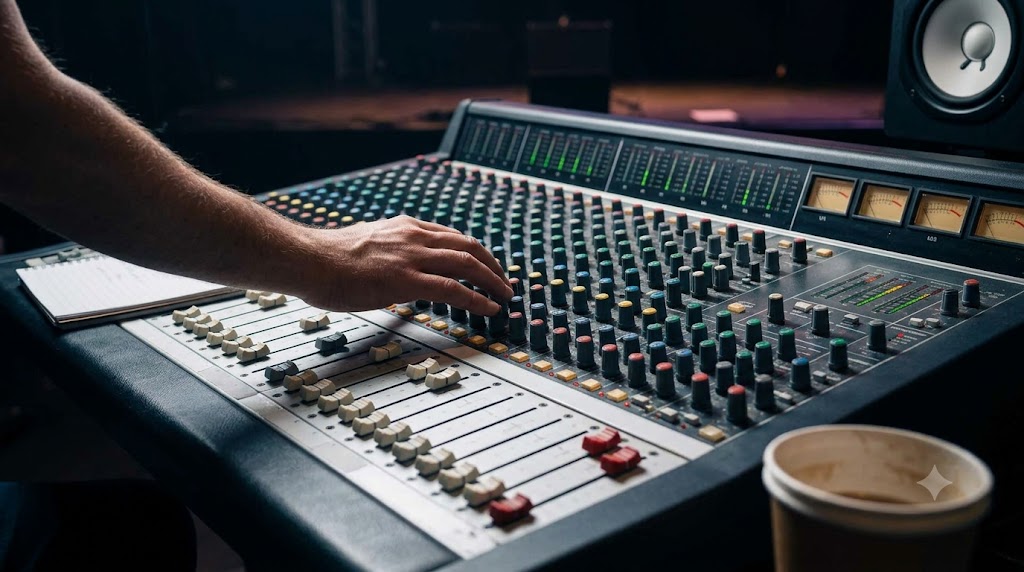
    When it comes to live events, great sound is invisible. When it’s perfect, the audience doesn’t think about the speakers, the cables, or the mixing console—they just feel the music. But achieving that seamless, crystal-clear experience doesn’t happen by accident. It takes professional gear, a trained ear, and meticulous execution.

    Here is a look behind the scenes at why professional live sound engineering is the ultimate make-or-break element for your next event.


    1. The Power of High-End Gear (And Knowing How to Use It)

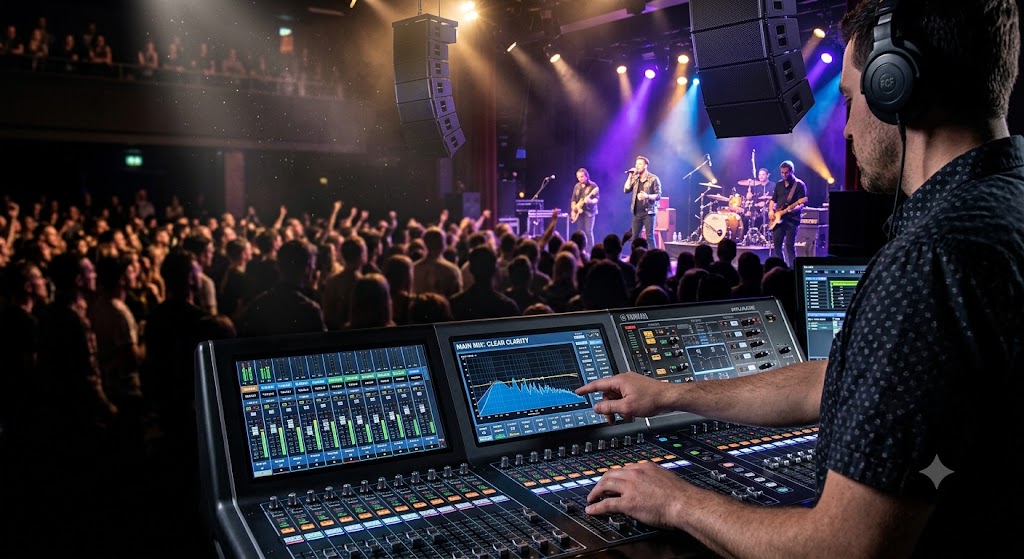
    There is a massive difference between a couple of speakers thrown on tripods and a fully optimized, professional PA system. Premium components—like high-fidelity RCF speakers and advanced digital mixing consoles—provide the headroom, clarity, and coverage needed to fill a room evenly.

    But top-tier gear is only half the battle. A professional sound company doesn’t just turn the volume up; they tune the system to the unique acoustics of the room, ensuring that the person in the front row and the person by the back bar get the exact same pristine audio experience.

    2. The Art of the Live Mix

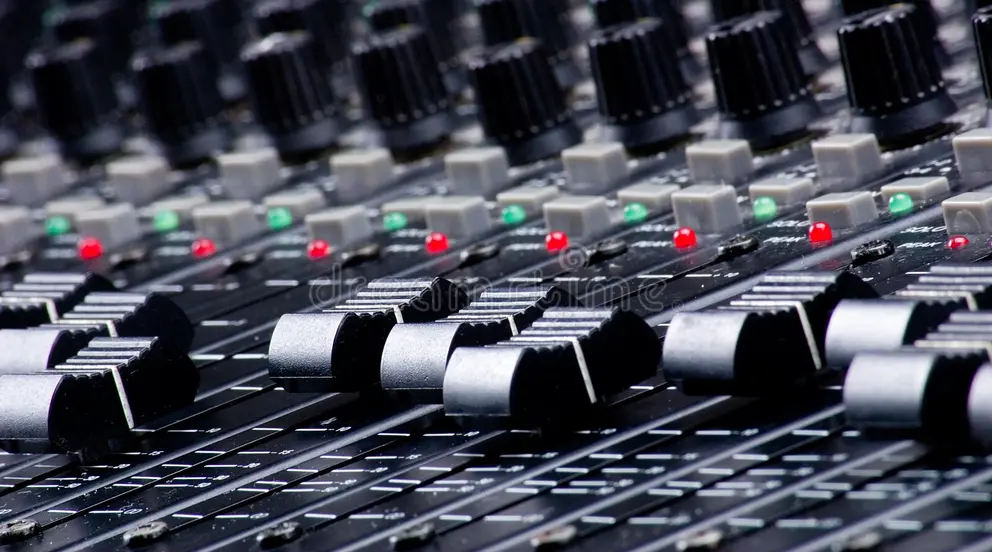
    A live sound engineer is essentially an invisible member of the band. Every instrument and vocal mic needs its own pocket in the sonic landscape.

    • Frequency Coordination: Giving the vocals clarity so they cut through without being harsh.
    • Dynamic Control: Taming a heavy-handed drummer while boosting a subtle acoustic guitar.
    • Real-Time Troubleshooting: Catching and correcting a problematic frequency before it turns into crowd-killing feedback.

    It’s a balancing act that requires split-second decision-making and a deep understanding of audio science.

    3. Stress-Free Execution for Performers and Organizers

    For musicians, comedians, and event hosts, confidence on stage is everything. If the stage monitors sound terrible, the performance suffers.

    Hiring a professional production crew means the talent can focus entirely on doing what they do best. From managing wireless frequencies to delivering perfect monitor or in-ear mixes, a pro audio team handles the technical heavy lifting so the stage remains a stress-free zone.


    The Golden Rule of Live Sound: If the audience is talking about the music and not the sound system, you’ve done your job perfectly.

    Ready to Elevate Your Next Event?

    Whether you’re packing a local club, organizing a corporate function, or throwing an outdoor festival, don’t leave your audio to chance. Elevate your performance with Connecticut’s premier choice for live sound production.

    Get in touch with Stonehenge Sound today to discuss your upcoming dates, gear requirements, and booking info. Let’s make your next gig sound unforgettable.
  • How to Get a Clear Live Sound Mix: 5 Proven Tips

    How to Get a Clear Live Sound Mix: 5 Proven Tips

    1. Gain Staging is Everything

    Before you touch a single fader or EQ knob, get your gain structure right.

    • Have the musicians play at their actual performance volume (they always play louder once the crowd arrives).
    • Set your preamp gain so the hottest peaks sit safely in the green/yellow zone, well away from clipping.
    • Proper gain staging gives you clean audio, a low noise floor, and ensures your compressors and effects behave predictably.

    2. Protect Your Headroom (The “Subtract Before You Add” Rule)

    If a instrument or vocal isn’t cutting through the mix, your first instinct shouldn’t be to push its fader up or boost its EQ frequencies.

    • Use High-Pass Filters (HPFs): Clear out the low-end mud. Engage the HPF on vocals, guitars, cymbals, and keys to roll off everything below $80\text{ Hz} – 100\text{ Hz}$. This frees up massive amounts of headroom for your kick drum and bass.
    • Carve, Don’t Boost: If a vocal sounds muddy, cut some of the low-mids ($200\text{ Hz} – 400\text{ Hz}$) instead of boosting the highs.

    3. Ring Out the Monitors First

    Feedback is the ultimate enemy of a live sound engineer. Before the band even starts a full soundcheck, ring out the stage wedges.

    • Push a vocal mic until it just starts to ring.
    • Use a parametric or graphic EQ to notch out that specific problem frequency.
    • Repeat the process for the next couple of frequencies that pop up. This gives the band a much louder, clearer monitor mix before feedback occurs.

    4. Manage Stage Volume

    A great Front of House (FOH) mix is impossible if the stage volume is deafening.

    • Guitar amplifiers are notoriously directional and often blast right past the guitarist’s ankles straight into the vocal mics. Ask players to angle their cabinets upward or slightly off-stage.
    • Encourage the use of in-ear monitors (IEMs) or keep the stage wedges as quiet as the band is comfortable with to prevent bleed into your main mix.

    5. Walk the Room

    What sounds incredible at the mixing console might sound completely different in the front row or dead in the back corners.

    • During soundcheck, leave the board and walk around the entire venue.
    • Pay attention to the coverage of your PA system. If the highs are piercing near the stage but dull in the back, you may need to adjust the physical tilt of your speakers or compensate slightly in your master EQ.
  • Clear Signals: The Science of Wireless Audio and Frequency Coordination

    Clear Signals: The Science of Wireless Audio and Frequency Coordination

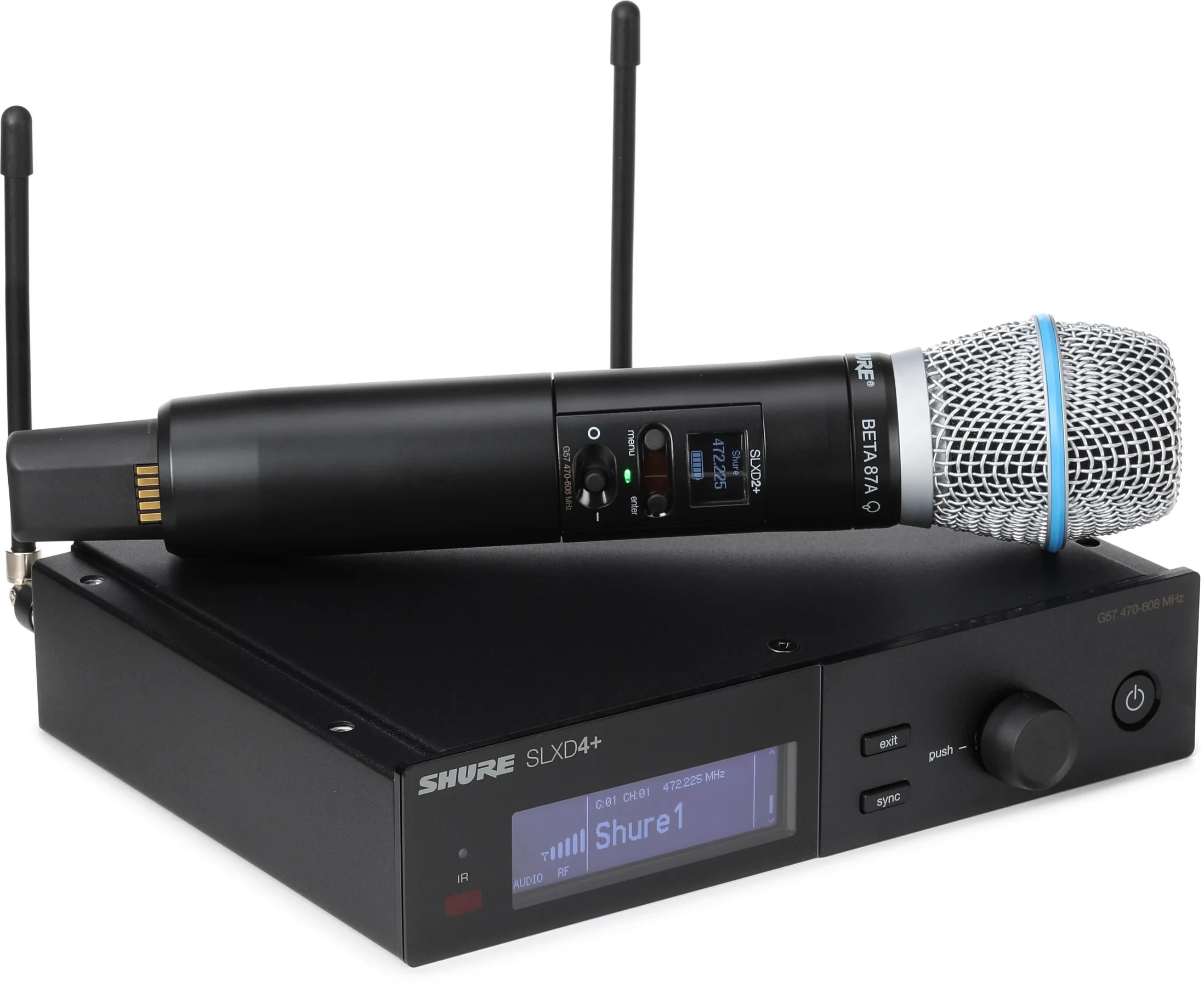
    In the world of live event production, few things provide as much freedom—or carry as much inherent risk—as wireless audio. Cutting the cords allows vocalists to command the stage, presenters to move naturally, and stage crews to keep the performance space clean and hazard-free.

    But behind every wireless microphone, in-ear monitor (IEM), and wireless instrument pack is an invisible battlefield.

    Unlike a copper audio cable, which is completely isolated from the outside world, wireless audio signals share the open air with thousands of competing transmissions. From local television broadcasts to cellular data networks, the radio spectrum is incredibly crowded. If your sound company isn’t actively managing that spectrum, your event is a ticking time bomb for dropouts, static, and deafening bursts of interference.

    Here is a deep dive into how RF (Radio Frequency) engineering works, why wireless systems fail, and how professional production crews keep the signals crystal clear.


    1. The Anatomy of an RF Drop-Out

    To fix wireless issues, you first have to understand why they happen. A drop-out occurs when the receiver at the mixing position loses its lock on the transmitter’s signal from the stage. This usually happens for one of three reasons:

    • Multipath Interference: Radio waves bounce off walls, metal roof trusses, and concrete pillars. When these reflected waves arrive at the receiver’s antennas a fraction of a millisecond later than the direct wave, they can cancel each other out. This creates a literal “dead zone” on stage where a microphone will completely cut to silence.
    • Intermodulation Distortion (IMD): When you turn on multiple wireless transmitters simultaneously, their signals actually interact with each other in the air and inside the hardware components. This interaction generates new, unintended phantom frequencies. If one of these phantom frequencies happens to land on the channel assigned to your lead singer’s mic, it will cause severe interference.
    • A Cavern of Water: Human bodies are composed mostly of water, which happens to be highly effective at absorbing RF energy in certain bands. A wireless system that works perfectly in an empty room during soundcheck can completely fail the moment a crowded room of attendees stands up between the stage and the wireless rack.

    2. Reading the Invisible Airspace: RF Scanning

    You cannot fix what you cannot see. A professional live audio crew never rolls into a venue, turns on a wireless rack, and hopes for the best.

    Before assigning any channels, engineers utilize specialized RF spectrum analyzers or network-connected wireless receivers to scan the local airspace.

    [RF Scanner] ---> Captures Local Airwaves ---> Maps Out TV Station Spikes | Identifies Clear "Valleys" for Safe Audio Transmission

    This scan generates a visual map of the radio frequencies currently bouncing through the venue. The engineer looks for the “noise floor”—the baseline level of background radio chaos—and identifies the deep, clean valleys between massive spikes of local digital TV stations and emergency frequencies.


    3. The Coordination Matrix: Digital Tools

    Once the scan data is collected, it is imported into coordination software like Shure Wireless Workbench. The software runs complex mathematical algorithms to calculate safe, intermodulation-free frequency paths.

    Step in CoordinationWhat the Software CalculatesWhy It Matters
    Frequency ExclusionMaps out and blocks known local TV broadcast bands.Prevents your microphones from fighting massive multi-kilowatt television transmitters.
    Spacing & PaddingCalculates the necessary “breathing room” between channels.Ensures your lead vocal mic doesn’t bleed into your acoustic guitar pack.
    Fallback ChannelingPre-calculates extra, clean backup frequencies.If a piece of unexpected outside interference strikes mid-show, the tech can instantly swap to a clean backup.

    4. Hardware Optimization: More Than Just Antennas

    Having a perfectly coordinated frequency sheet won’t save a show if the physical hardware is poorly deployed. Proper RF distribution is a core pillar of a rock-solid live audio setup.

    Directional Antennas (Paddles)

    Standard omnidirectional “whip” antennas pick up radio signals from all directions, including the interference bouncing around from the street outside. Professional crews use directional antennas (often called paddle or helical antennas). These act like spotlights, focusing their receiving sensitivity directly on the stage while rejecting background noise from the rear.

    Antenna Distribution Amps

    If you have 8 wireless receivers, you shouldn’t have 16 small whip antennas sticking out of your rack. This creates massive antenna cross-talk. Instead, professional racks route all receivers into a single antenna distribution amplifier. This clean system splits the master signal from a single pair of high-quality external paddles out to all your receivers seamlessly, preserving maximum signal strength.


    Bulletproof Audio for Your Venue

    The difference between an amateur production and a professional showcase comes down to what happens in the invisible spaces. Managing radio frequencies requires specialized tools, mathematical calculations, and constant vigilance throughout an event.

    At Stonehenge Sound, we take wireless audio seriously. Whether we are coordinating complex multi-microphone panels for corporate keynotes or managing a dozen channels of wireless instruments and in-ear monitors for a festival stage, our team ensures your audio remains completely locked in.

  • Mastering the Mix: The Definitive Guide to Achieving Crystal-Clear Live Sound

    Mastering the Mix: The Definitive Guide to Achieving Crystal-Clear Live Sound

    There is a massive difference between a live event that is simply loud and one that is truly immersive. We’ve all been to a show where the bass violently shakes the walls but drowns out the vocals, or where a piercing whistle of microphone feedback ruins a crucial moment.

    Achieving pristine live audio isn’t an accident. It is a precise science that combines high-performance hardware, acoustic calculation, and sharp engineering intuition. Whether you are a venue manager looking to upgrade your entertainment experience, an event planner organizing a festival, or a band trying to optimize your stage footprint, understanding the core fundamentals of professional audio production is the key to a successful night.

    In this comprehensive guide, we break down the critical elements that define concert-quality sound and how professional engineering transforms a live space.


    1. Acoustic Reality: Reading the Room

    Before a single cable is run or a power switch is flipped, a sound engineer’s first job is to evaluate the venue itself. Every room acts as a massive acoustic instrument, reflecting, absorbing, and reshaping sound waves based on its architecture.

    The Challenge of Reflections

    • Hard Surfaces: Concrete floors, exposed brick walls, and glass windows act as sonic mirrors. When high-frequency sound hits them, it bounces back into the room, creating an uncontrolled echo chamber that destroys vocal clarity.
    • Low-End Build-Up: Corners and deep recesses tend to trap low frequencies. This creates a “muddy” or “boomy” acoustic profile where the kick drum and bass guitar overwhelm the mid-range frequencies.

    The Professional Solution

    A professional sound crew doesn’t just blast sound directly at the audience; they carefully calculate speaker placement and angling. By using dispersion angles—directing the energy precisely at the crowd and away from reflective ceilings and walls—you minimize acoustic reflections and ensure every seat in the house gets the exact same sonic clarity.


    2. System Architecture: The Power of Pro-Tier PAs

    You cannot deliver premium sound with budget consumer equipment. A professional live audio setup relies on high-fidelity, high-headroom loudspeaker systems engineered specifically to handle the dynamic peaks of a live performance without distorting.

    ComponentRole in the MixWhy Premium Matters
    Main Tops / Line ArraysHandles vocals, guitars, and high frequencies.Provides precise horizontal and vertical coverage so the sound doesn’t drop off in the back of the room.
    SubwoofersHandles the low-end punch (kick drum, bass, synthesizers).Premium subs deliver tight, physical low-end energy that you feel in your chest, without muddying the rest of the mix.
    Stage Monitors / IEMsAllows the performers to hear themselves and each other.Clean monitor mixes prevent performers from over-singing or playing too loudly, which directly improves the front-of-house mix.

    The Value of “Headroom”

    In audio engineering, headroom is the difference between your normal operating signal level and the maximum level that the system can handle before distorting. Running a cheap PA system at 95% capacity causes the sound to compress, distort, and fatigue the ears of the audience. A professional, high-headroom system can coast effortlessly at 50% capacity, delivering massive, punchy sound that remains crystal clear and completely safe for listeners.


    3. The Stage Volume Paradox: Less is More

    One of the biggest misconceptions in live entertainment is that everything on stage needs to be turned up to eleven. In reality, a wall of screaming guitar amplifiers and heavy-handed drumming often makes a venue sound worse.

    This is known as stage bleed—when the sound from an on-stage amplifier or instrument leaks directly into the vocal microphones.

    [ Loud Guitar Amp ] ---> Bleeds Into ---> [ Vocal Microphone ] | Creates a Muddy Mix & Triggers Feedback Loop

    Tips for Perfect Stage Balance

    1. Rely on the PA, Not the Amps: Keep instrument amplifiers at a moderate volume on stage, angled inward toward the musician rather than outward into the crowd. Let the front-of-house PA system do the heavy lifting of projecting the sound to the audience.
    2. Embrace Direct Boxes (DI): Whenever possible, route acoustic guitars, keyboards, and bass rigs directly into the mixing board via DI boxes. This removes acoustic stage noise entirely, allowing the engineer to sculpt a pristine digital or analog mix.
    3. Control the Drums: If a venue has tricky acoustics, using plexiglass drum shields or dampening tools can contain the acoustic volume of the drum kit, giving the sound engineer complete control over the drum mics.

    4. The Human Element: The Role of the Engineer

    Even the most expensive sound system in the world is useless without a skilled pilot behind the mixing board. A live sound engineer is part scientist and part artist, constantly adjusting parameters in real-time to maintain perfect equilibrium.

    During a live show, the engineer is managing:

    • Gain Staging: Optimizing the input levels of every single microphone to maximize signal strength while preventing clipping and clipping distortion.
    • Subtractive EQ: Cutting out problem frequencies rather than boosting good ones. For example, rolling off the low frequencies on a vocal mic to eliminate mic-stand rumble and proximity effect.
    • Dynamic Compression: Taming sudden, unpredictable volume spikes from a vocalist or snare drum so that they sit perfectly flat and polished within the overall sonic landscape.

    Elevate Your Next Event

    Great sound isn’t a luxury—it’s an absolute necessity. When your audio production is handled flawlessly, the barrier between the performers and the audience completely disappears, creating an unforgettable experience.

    At Stonehenge Sound, we bring years of engineering expertise, a dedication to professional-grade hardware, and a passion for sonic perfection to every stage we build.

  • 3 Things Your Live Sound Engineer Wishes You Knew

    3 Things Your Live Sound Engineer Wishes You Knew

    The relationship between a band and their live sound engineer is a beautiful partnership. When both sides are on the same page, magic happens. To help ensure your next gig goes off without a hitch, here are three quick tips from behind the mixing board:

    • Turn Down the Stage Volume: It sounds counterintuitive, but if your guitar amps are screaming on stage, it makes it incredibly difficult to get a clean, clear mix in the front-of-house PA. Let the sound system do the heavy lifting!
    • Label Your Lines: If you bring your own sub-snakes or specific wireless rigs, clear labeling saves precious time during a rushed soundcheck.
    • Trust the Soundcheck: A soundcheck isn’t just a rehearsal; it’s when we dial in the room’s frequencies and eliminate feedback nodes.

    Great sound is a team effort. When you work with a dedicated production crew, you can focus entirely on your performance while we handle the heavy decibels.

  • The Importance of a Professional PA System for Live Events

    The Importance of a Professional PA System for Live Events

    Why Great Live Sound Can Make or Break Your Event

    When you’re planning a live event, there are a million details to track—the venue, the talent, the lighting, and the crowd. But there’s one invisible element that will completely dictate the success of your night: the sound quality. You can book the most talented band in Connecticut, but if the PA system can’t deliver clear, balanced audio to every corner of the room, the audience will tune out.

    The Sonic Difference: A great live sound setup doesn’t just make things louder—it makes them clearer. It ensures the vocals cut through the mix, the bass is punchy without being muddy, and the high-end doesn’t fatigue the crowd’s ears.

    At Stonehenge Sound, we specialize in bringing concert-quality audio production to events of all sizes. Utilizing premium, high-performance loudspeaker systems and professional mixing consoles, we tailor every setup specifically to the acoustics of the venue. Don’t let poor audio compromise your next show.

    Want to elevate your next event? Get in touch with us for booking info.

  • Audio Pro CT

    Audio Pro CT

    Check out Frank. He has some awesome deals! AudioProCt.com