There is a massive difference between a live event that is simply loud and one that is truly immersive. We’ve all been to a show where the bass violently shakes the walls but drowns out the vocals, or where a piercing whistle of microphone feedback ruins a crucial moment.
Achieving pristine live audio isn’t an accident. It is a precise science that combines high-performance hardware, acoustic calculation, and sharp engineering intuition. Whether you are a venue manager looking to upgrade your entertainment experience, an event planner organizing a festival, or a band trying to optimize your stage footprint, understanding the core fundamentals of professional audio production is the key to a successful night.
In this comprehensive guide, we break down the critical elements that define concert-quality sound and how professional engineering transforms a live space.
1. Acoustic Reality: Reading the Room
Before a single cable is run or a power switch is flipped, a sound engineer’s first job is to evaluate the venue itself. Every room acts as a massive acoustic instrument, reflecting, absorbing, and reshaping sound waves based on its architecture.
The Challenge of Reflections
- Hard Surfaces: Concrete floors, exposed brick walls, and glass windows act as sonic mirrors. When high-frequency sound hits them, it bounces back into the room, creating an uncontrolled echo chamber that destroys vocal clarity.
- Low-End Build-Up: Corners and deep recesses tend to trap low frequencies. This creates a “muddy” or “boomy” acoustic profile where the kick drum and bass guitar overwhelm the mid-range frequencies.
The Professional Solution
A professional sound crew doesn’t just blast sound directly at the audience; they carefully calculate speaker placement and angling. By using dispersion angles—directing the energy precisely at the crowd and away from reflective ceilings and walls—you minimize acoustic reflections and ensure every seat in the house gets the exact same sonic clarity.
2. System Architecture: The Power of Pro-Tier PAs
You cannot deliver premium sound with budget consumer equipment. A professional live audio setup relies on high-fidelity, high-headroom loudspeaker systems engineered specifically to handle the dynamic peaks of a live performance without distorting.
| Component | Role in the Mix | Why Premium Matters |
| Main Tops / Line Arrays | Handles vocals, guitars, and high frequencies. | Provides precise horizontal and vertical coverage so the sound doesn’t drop off in the back of the room. |
| Subwoofers | Handles the low-end punch (kick drum, bass, synthesizers). | Premium subs deliver tight, physical low-end energy that you feel in your chest, without muddying the rest of the mix. |
| Stage Monitors / IEMs | Allows the performers to hear themselves and each other. | Clean monitor mixes prevent performers from over-singing or playing too loudly, which directly improves the front-of-house mix. |
The Value of “Headroom”
In audio engineering, headroom is the difference between your normal operating signal level and the maximum level that the system can handle before distorting. Running a cheap PA system at 95% capacity causes the sound to compress, distort, and fatigue the ears of the audience. A professional, high-headroom system can coast effortlessly at 50% capacity, delivering massive, punchy sound that remains crystal clear and completely safe for listeners.
3. The Stage Volume Paradox: Less is More
One of the biggest misconceptions in live entertainment is that everything on stage needs to be turned up to eleven. In reality, a wall of screaming guitar amplifiers and heavy-handed drumming often makes a venue sound worse.
This is known as stage bleed—when the sound from an on-stage amplifier or instrument leaks directly into the vocal microphones.
[ Loud Guitar Amp ] ---> Bleeds Into ---> [ Vocal Microphone ] | Creates a Muddy Mix & Triggers Feedback LoopTips for Perfect Stage Balance
- Rely on the PA, Not the Amps: Keep instrument amplifiers at a moderate volume on stage, angled inward toward the musician rather than outward into the crowd. Let the front-of-house PA system do the heavy lifting of projecting the sound to the audience.
- Embrace Direct Boxes (DI): Whenever possible, route acoustic guitars, keyboards, and bass rigs directly into the mixing board via DI boxes. This removes acoustic stage noise entirely, allowing the engineer to sculpt a pristine digital or analog mix.
- Control the Drums: If a venue has tricky acoustics, using plexiglass drum shields or dampening tools can contain the acoustic volume of the drum kit, giving the sound engineer complete control over the drum mics.
4. The Human Element: The Role of the Engineer
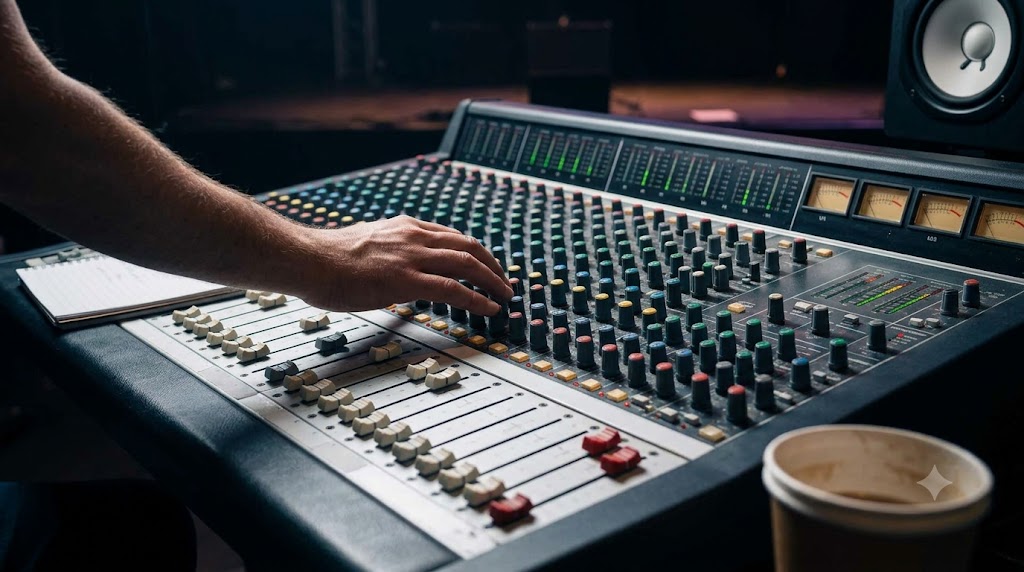
Even the most expensive sound system in the world is useless without a skilled pilot behind the mixing board. A live sound engineer is part scientist and part artist, constantly adjusting parameters in real-time to maintain perfect equilibrium.
During a live show, the engineer is managing:
- Gain Staging: Optimizing the input levels of every single microphone to maximize signal strength while preventing clipping and clipping distortion.
- Subtractive EQ: Cutting out problem frequencies rather than boosting good ones. For example, rolling off the low frequencies on a vocal mic to eliminate mic-stand rumble and proximity effect.
- Dynamic Compression: Taming sudden, unpredictable volume spikes from a vocalist or snare drum so that they sit perfectly flat and polished within the overall sonic landscape.
Elevate Your Next Event
Great sound isn’t a luxury—it’s an absolute necessity. When your audio production is handled flawlessly, the barrier between the performers and the audience completely disappears, creating an unforgettable experience.
At Stonehenge Sound, we bring years of engineering expertise, a dedication to professional-grade hardware, and a passion for sonic perfection to every stage we build.
Leave a Reply